
Indiana SAVIN Coverage in Knox County
Indiana's own FAQ is clear. SAVIN supplies custody information for all 92 counties. The service is free, and it works around the clock, online or by phone. That covers Knox County Jail checks. The sheriff's current app lists no separate Knox-specific VINE deployment. So there is no reason to expect a second local system or a special county feed. In ordinary practice the two names work as a pair. SAVIN is Indiana's notification program. VINELink is the national interface through which a participating Indiana record can be searched. The result answers a custody question only. It does not replace a charging document, a court disposition, or the sheriff's original booking record. The Indiana SAVIN service presents the statewide custody and registration route.
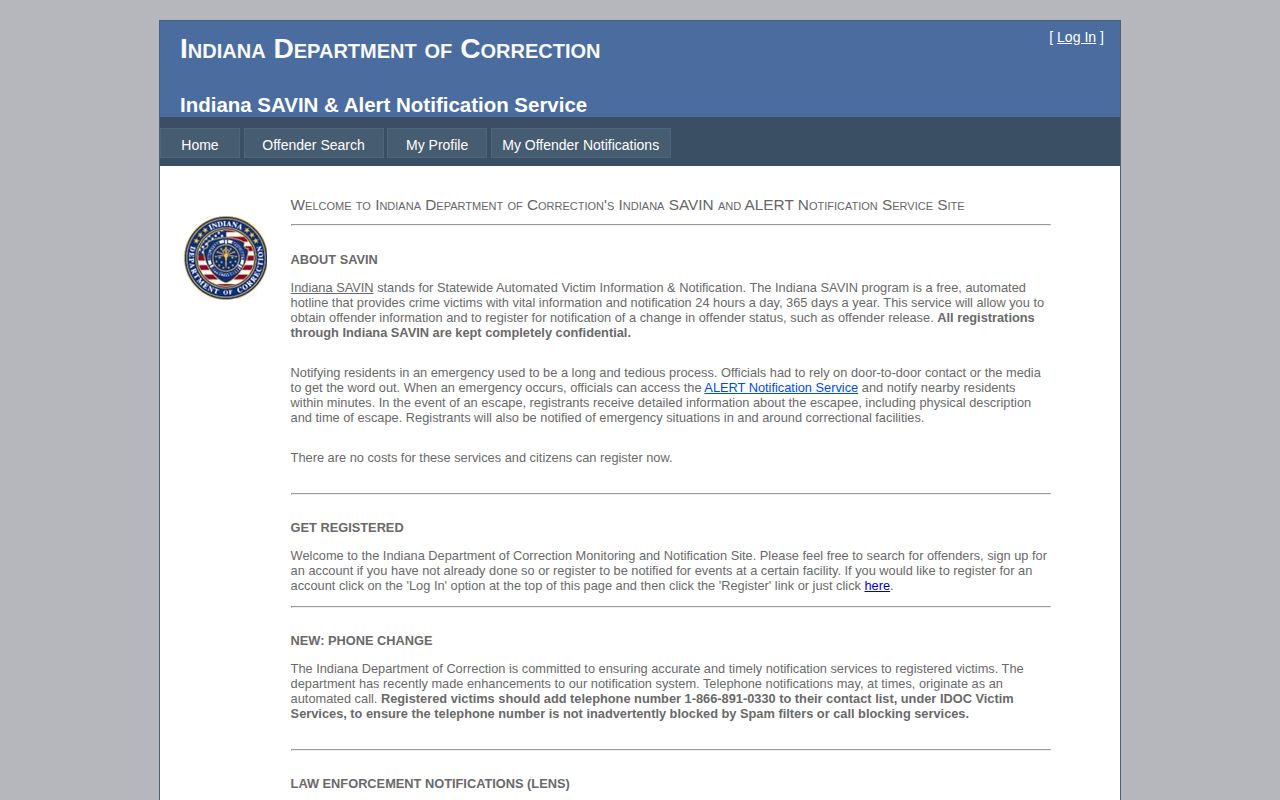
This captured state landing view is the official starting point for Indiana notification information.
Check a Knox County Arrest on VINELink
Start with enough identity detail to separate people who share a name. A middle name or birth date helps. Keep the sheriff's booking feed open in another tab when an entry exists, since its exact spelling, Inmate ID, booking time, and agency let you test a match. Never assume the first similar name is the right person.
- Open VINELink and choose Indiana from the jurisdiction selection.
- Select Knox County if the current interface offers a county filter, then choose the offender or custody search.
- Enter the full last name and first name or initial in the fields the interface allows. Use an identifier when one is accepted.
- Compare all returned names, facilities, status details, and identifiers. Open the record only after the details reasonably align.
- Read the status and reported facility, then use the registration control if notice of later custody changes is needed.
A blank result proves little. An arrest may still have occurred. The data may lag, the name may differ, or the record may be restricted. Check the sheriff's booking publication, or call the Knox County Sheriff's Office at 812-882-7660 when timing matters.
What VINELink Shows After an Arrest
Fields vary by jurisdiction and event. Still, the record is built to identify a person and describe reported custody. It is narrower than the Knox County booking feed and far narrower than a court file. The real value is the alert function.
| Result field | How to read it |
|---|---|
| Name | Compare spelling with the sheriff or court source |
| Identifier | Use the displayed number to distinguish similar names |
| Custody status | Read the service's current reported state, then confirm urgent facts with the facility |
| Facility | Shows the reported holding location when supplied |
| Event | Can describe release, transfer, escape, or another custody change |
| Registration option | Starts phone or email notification enrollment when available |
VINELink does not supply the sheriff's booking photograph. No arrest narrative or final court disposition appears either. MyCase or the Knox County Clerk is where you learn whether a prosecutor filed a case and how the court resolved it.
Note: Confirm identity before registering, because a shared name can otherwise send alerts about the wrong person.
Register for Knox County Custody Alerts
Registration can use a phone number, plus email where the interface offers it for the chosen event. Indiana materials describe confidential enrollment. The four-digit PIN for telephone notices confirms receipt and helps manage calls, and it should never double as a general account password. Store it privately.
- Open the correctly matched custody record and choose the notification or registration option.
- Select the reported event types offered, which may include release, transfer, escape, or another change.
- Enter the phone number or email address requested by the current interface.
- Create the four-digit telephone PIN when prompted, record it in a secure place, and finish any confirmation step.
- Keep the sheriff's number available because an automated notice should not replace emergency or time-sensitive verification.
The statewide Indiana SAVIN number is 1-866-891-0330. County VINE materials also publish 1-866-959-8463, written as 1-866-959-VINE. These are distinct channels, not one line. The first is the statewide SAVIN contact Indiana cites, while the second is the VINE jail-notification number.
What Knox County Alerts Can Mean
A release alert reports a custody release event. It gives no reason. The person may have posted bond, finished a sentence, received a court order, or moved into another legal status. A transfer alert means the reported location changed. The underlying case may still be open. An escape notice is a safety notification, so route it through law enforcement and never through personal contact. Alerts can also lag behind the event. Data must move from the custody source into the statewide service and then to your chosen contact channel. A missed call, spam filter, disconnected line, or wrong registration detail can interrupt delivery too. Keep contact details current, and verify any critical change with the Knox County Jail or the reported receiving facility.
- Custody
- The reported physical or legal holding state.
- Transfer
- A move from one reported facility or authority to another.
- Release
- An end to the reported custody event, not necessarily the end of the case.
- PIN
- The private four-digit code used with telephone notifications.
Booking Feed Versus VINELink Status
These two tools do different jobs. The Knox County Sheriff's OCV Inmates stream is a historical booking publication with exact intake timestamps, agency labels, charge and bond text, and photographs. It has no consistent release-status field. Entries from 2023 still sit in it. So an old listing can stay up after release. VINELink works the other angle, tracking one person's status and the events that can trigger an alert. A new booking may hit the sheriff stream first. Sync can lag. A person can also drop from an active custody result while the booking entry remains. When the two disagree, call the facility and preserve the source details rather than forcing one story out of both systems. The VINELink search interface shows the jurisdiction-selection experience used for a custody check.
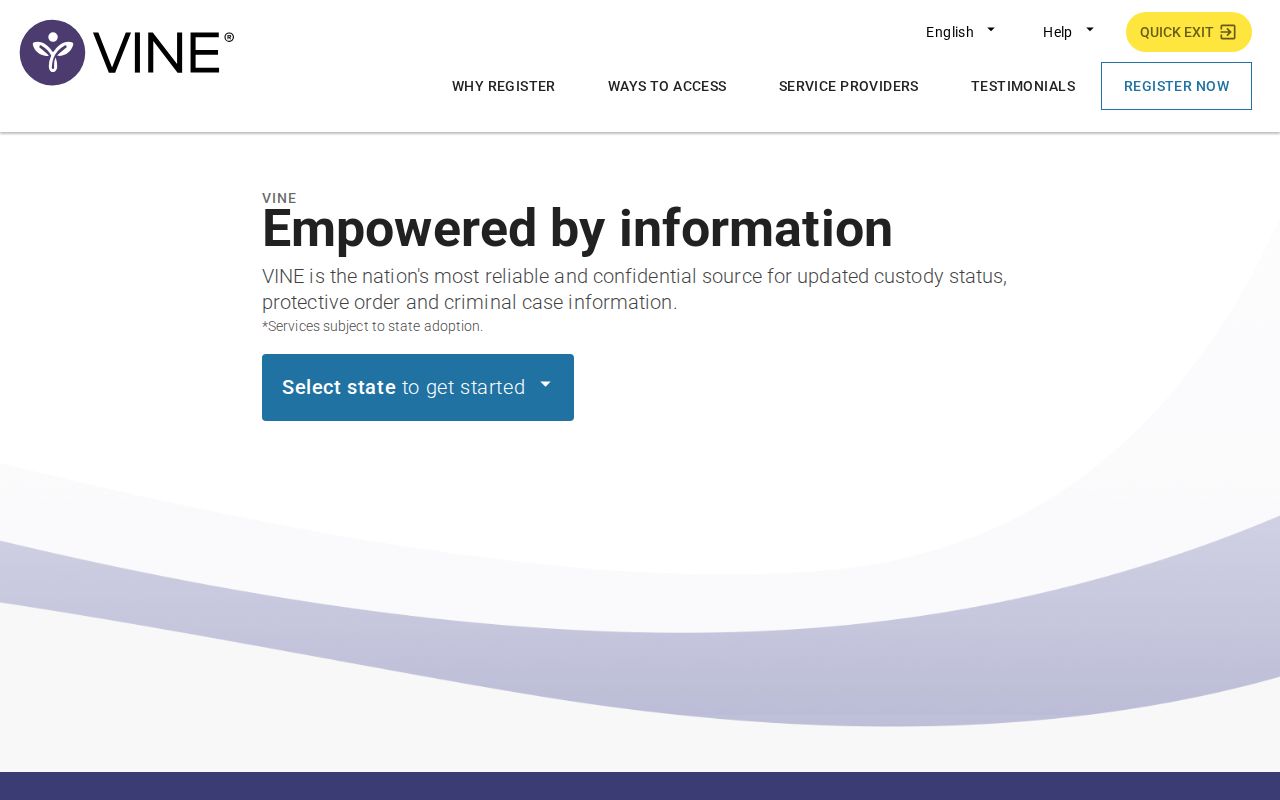
The official VINELink page shows the custody-search screen itself.
VINELink Limits and Knox County Verification
No locator sees everything. VINELink pulls from participating county jails and state corrections systems, which makes it a genuinely useful starting point. Still, it is not a federal database. Custody under the Bureau of Prisons, ICE detention, and U.S. Marshals pretrial holds all sit outside its reach. Someone held in a local jail on a federal matter can even stay invisible to the BOP locator for a while.
Layer your tools instead of leaning on one. The sheriff's inmate feed shows the booking event, while a call to the Knox County Sheriff's Office confirms where the person is held right now. MyCase tracks the public court case, and an IDOC search picks up the trail after a transfer to state prison. Facing immediate danger? Call 911 first. Notification tools help with safety planning, yet a time-sensitive decision deserves more than a single alert.
Using Indiana VINE Notices Safely
A notice works best as part of a plan. Pair it with a current safety strategy and direct phone numbers for the authorities involved. Keep the registration PIN somewhere separate from the case details. Check that voicemail boxes and email filters will actually accept incoming notices. Review which event types you selected, too. If your phone number or email changes, update the registration. The old alert will not simply follow you.
Automated alerts can lag or go down. Treat them as helpful, never as a guarantee of safety. During an immediate threat, call 911. For a non-emergency question about the Knox County Jail, the sheriff's line is 812-882-7660. Protective orders, hearings, and filed criminal cases belong with the court, the Knox County Clerk, or qualified legal counsel. VINELink support does not handle them.
Remember that custody and the court case run on separate clocks. A release can happen while charges are still pending. A transfer can move a person without touching the case file at all. When the legal outcome matters, keep checking the official court record.